Reviving Farmers' Markets
Farmers’ Markets are age old systems that offer direct contact with sellers, fresh produce and an experience of local culture with competitive prices. Such markets make people more aware of the food they are consuming, while eliminating the middlemen.
The pandemic has hit this vibrant space, and people are shopping online or waiting for trucks to deliver fruits and vegetables near them. Farmers and micro-entrepreneurs are suffering financially and we hear stories where they are simply dumping their produce in wastelands. The economic downturn also means that consumers have less money to spend. The Government had published norms for ‘social distancing’ in the first year of the pandemic, which changed the nature of engagement in these markets and reduced the footfall.
What is desperately needed at this time is a new bridge between farmers and consumers. We see some efforts of local farmers renting trucks and selling produce on highways. But this is unsustainable in the long term and will result in further crashing of prices. This is a service concept that aims to link farmers and consumers in a fair and sustainable way, that can benefit both parties equally.
Pre Pandemic Ecosystem Map
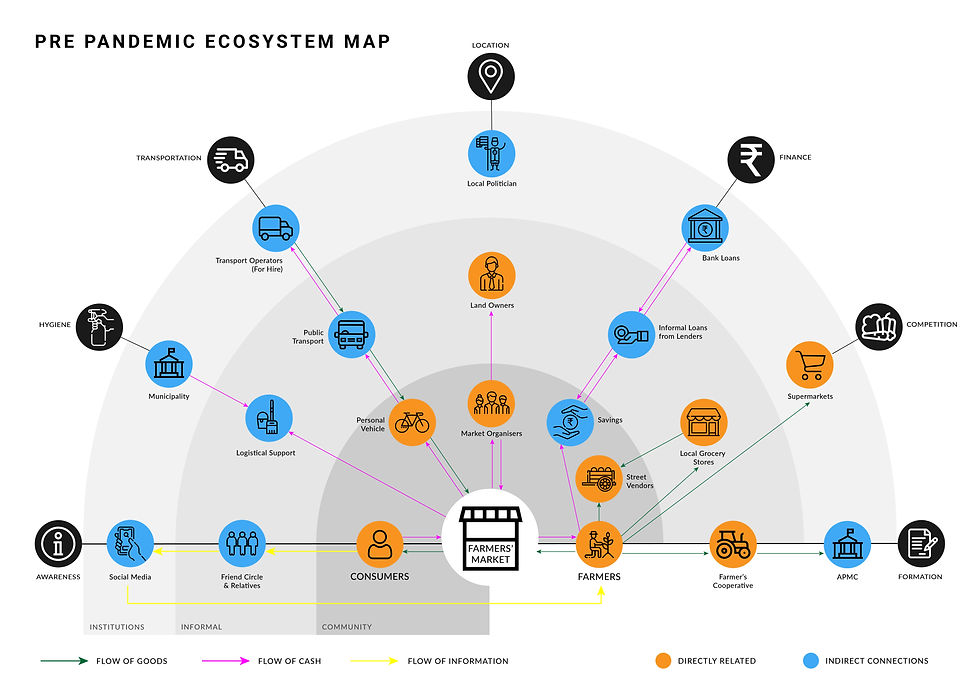
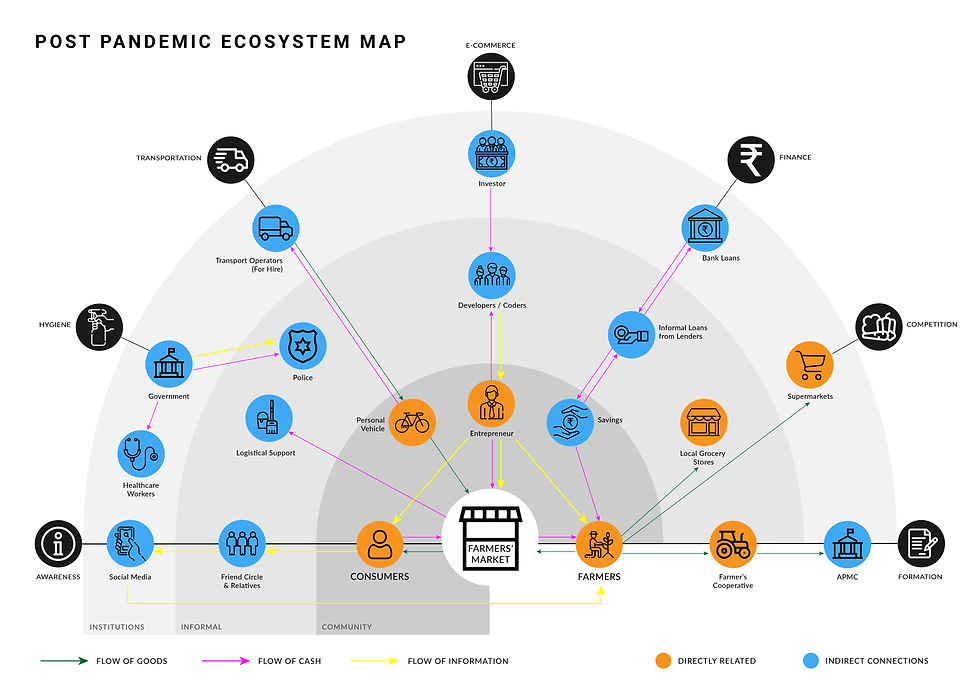
Post Pandemic Ecosystem Map
Flow of Produce from Farm to Fork

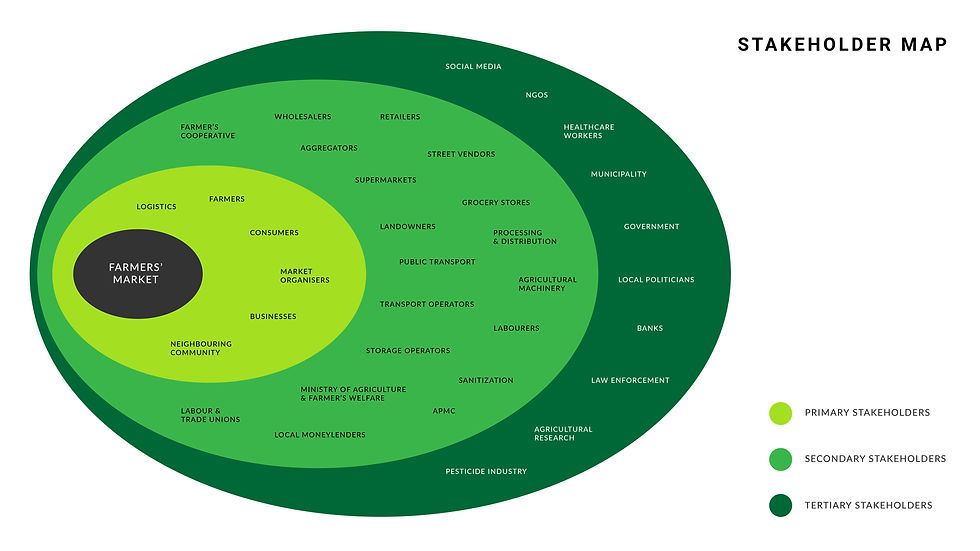
Stakeholder Map

Service Brief
Due to the Pandemic, there are strict restrictions on public gatherings and people are looking for ways to source their fresh produce from the comfort of their homes. Many e-commerce platforms have started taking orders online and provide doorstep delivery. In such a situation a Farmers’ Market can only be held if the farmers can take their produce to various localities in mobile vans and sell directly to the residents. The major problems in the pre pandemic system were lack of storage facilities leading to wastage, lack of personal vehicles which prevented farmers from reaching the urban areas and systemic exploitation of farmers by intermediaries. The following service aims to solve these aforementioned problems and make the entire supply chain more efficient and robust.
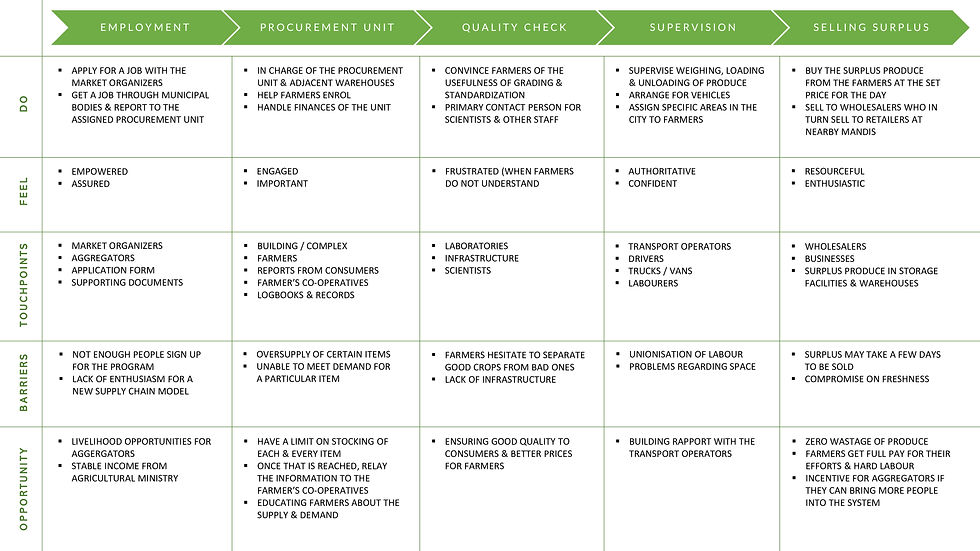
Firstly the Government issues legal tenders for setting up a Mobile Farmers’ Market system and then potential market organizers invest to come up with the infrastructure, like the procurement unit, warehouses, tie up with transport operators and so on. They also recruit logistical staff and hire the aggregators as managers and supervisors for these units and warehouses. They also work closely with the various farmer’s co-operatives and share information whenever possible.
The farmers who enrol in the service bring their produce to the nearest procurement centre and the produce is tested and graded. This is another area where intervention was absolutely necessary. In the current system there are a lot of malpractices prevalent due to the lack of standardisation and farmers often hesitate to separate the qualitatively better crops from the bad ones, which in turn leads to lower prices.
The unit manager contacts the transport operator and arranges for vehicles. After testing, the produce is loaded in trucks and the manager buys the surplus from the farmer at the fixed price for the day, which is then stored in the adjacent warehouse and later sold to wholesalers and other businesses. Then the farmer accompanied by the driver goes to the area which has been assigned to them and makes rounds of the locality while announcing their arrival through speakers on-board. Then they park by the road and sell directly to the consumers. The consumer can give feedback to the farmer in person and also to the market organizer which is relayed to the farmer’s co-operatives. This service tries to keep the essence of farmers’ market alive for the post pandemic era, keeping the new social regulations in mind.
Journey Map for Farmers

Journey Map for Aggregators
Journey Map for Market Organizer

Service Blueprint